

First run with Twitvid
Sunday, January 24, 2010


Playing with Twitvid
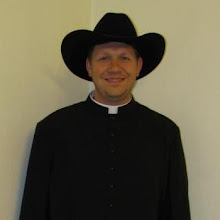
Over the last couple of days, I've been playing with Twitvid on my BlackBerry. It's a very impressive package: make a video, write a short tweet to describe it, and it'll post it to Twitter. Right now I'm just playing, but I can see some great possibilities for spreading the Gospel through short, simple videos. The Pope did ask us to use the Internet for that purpose, after all.
Saturday, January 16, 2010
Homily for the Second Sunday in Ordinary Time
It seems like we are all on a never-ending search for happiness and contentment, yet it also seems that we never truly find the key to a joyful life. We might find brief periods of happiness in a relationship with others, in some possession, or in a hobby or other activity that we enjoy, but that happiness always seems to be fleeting and brief.
With all our searching, we never seem to think that following Our Lord could ever bring us any joy. In fact, the stereotypical image of a Christian who devoutly follows Jesus is someone who is very dour and bitter, almost austere in their life. Joy seems to be the last thing on their minds, yet the readings today bring us a different picture. They show us that we live truly joyful lives when we use the gifts of the Spirit that we have been given by God.
Today's passage from St. John's Gospel reminds us of the first miracle that Our Lord performed when he began his earthly ministry. It wasn't a healing, or raising someone from the dead, or casting a demon out of someone. Instead, it might seem to have occurred at an insignificant event: running out of wine at a wedding. Our Lord used this occasion to show the joy God our Father wishes to bestow on us by not only producing some wine to continue the party, but producing an astounding quantity of the best wine.
Again, it might seem strange to us that God wants to bestow joy upon us, especially when it seems like our lives are one difficulty after another, but look at the first reading. The description of a newly-freed Israel is one of the joy felt by newlyweds, the buoyant, almost giddy feelings that accompany an important, joyful event in our lives, such as a wedding. The language isn't one of sorrow and pity, but of rejoicing: "as a bridegroom rejoices in his bride so shall your God rejoice in you." (Isaiah 62:5)
This is the joy that will come to us when we follow the spiritual life and exercise the gifts that we have been given by the Holy Spirit. Yes, this once again might be hard to believe, but the Holy Spirit has given each of us gifts that are for the benefit of ourselves and those we meet every day. St. Paul tells the Corinthians, and us, "to each individual the manifestation of the Spirit is given for some benefit," (1 Cor 12:7) following up with a list of some of the gifts which the Holy Spirit bestows upon us. This isn't a complete list by any stretch of the imagination, but helps us to understand the Holy Spirit has given us gifts, "distributing them individually to each person as He wishes." (1 Cor 12:11)
The difficulty we face when practicing the gifts we've been given comes when we're trying to figure out what they are in the first place. For some, the gifts are quite obvious, such as someone with a beautiful singing voice or a natural talent with musical instruments. Most of us, however, have to discern where those gifts lie and figure out how best to exercise them. In most cases, we need to work with those gifts once we've figured out what they are, developing our understanding of the gift and improving our familiarity with it.
When we do exercise the gifts we have been given, we can find a great joy in seeing those gifts used successfully. This might not happen at first, and may take many years to fully develop, but when we use the gifts of the Holy Spirit for the honor of God and to help our neighbors, we can truly find the joy that we are searching for. This joy far exceeds the happiness that we can ever receive through the things of this world. This joy is but a small taste of the joy that we will experience in the next life when we are in perfect union with our Heavenly Father.
In our search for happiness on Earth, may we seek the true joy that comes from finding and using the gifts of the Holy Spirit that reside within us.
With all our searching, we never seem to think that following Our Lord could ever bring us any joy. In fact, the stereotypical image of a Christian who devoutly follows Jesus is someone who is very dour and bitter, almost austere in their life. Joy seems to be the last thing on their minds, yet the readings today bring us a different picture. They show us that we live truly joyful lives when we use the gifts of the Spirit that we have been given by God.
Today's passage from St. John's Gospel reminds us of the first miracle that Our Lord performed when he began his earthly ministry. It wasn't a healing, or raising someone from the dead, or casting a demon out of someone. Instead, it might seem to have occurred at an insignificant event: running out of wine at a wedding. Our Lord used this occasion to show the joy God our Father wishes to bestow on us by not only producing some wine to continue the party, but producing an astounding quantity of the best wine.
Again, it might seem strange to us that God wants to bestow joy upon us, especially when it seems like our lives are one difficulty after another, but look at the first reading. The description of a newly-freed Israel is one of the joy felt by newlyweds, the buoyant, almost giddy feelings that accompany an important, joyful event in our lives, such as a wedding. The language isn't one of sorrow and pity, but of rejoicing: "as a bridegroom rejoices in his bride so shall your God rejoice in you." (Isaiah 62:5)
This is the joy that will come to us when we follow the spiritual life and exercise the gifts that we have been given by the Holy Spirit. Yes, this once again might be hard to believe, but the Holy Spirit has given each of us gifts that are for the benefit of ourselves and those we meet every day. St. Paul tells the Corinthians, and us, "to each individual the manifestation of the Spirit is given for some benefit," (1 Cor 12:7) following up with a list of some of the gifts which the Holy Spirit bestows upon us. This isn't a complete list by any stretch of the imagination, but helps us to understand the Holy Spirit has given us gifts, "distributing them individually to each person as He wishes." (1 Cor 12:11)
The difficulty we face when practicing the gifts we've been given comes when we're trying to figure out what they are in the first place. For some, the gifts are quite obvious, such as someone with a beautiful singing voice or a natural talent with musical instruments. Most of us, however, have to discern where those gifts lie and figure out how best to exercise them. In most cases, we need to work with those gifts once we've figured out what they are, developing our understanding of the gift and improving our familiarity with it.
When we do exercise the gifts we have been given, we can find a great joy in seeing those gifts used successfully. This might not happen at first, and may take many years to fully develop, but when we use the gifts of the Holy Spirit for the honor of God and to help our neighbors, we can truly find the joy that we are searching for. This joy far exceeds the happiness that we can ever receive through the things of this world. This joy is but a small taste of the joy that we will experience in the next life when we are in perfect union with our Heavenly Father.
In our search for happiness on Earth, may we seek the true joy that comes from finding and using the gifts of the Holy Spirit that reside within us.
Saturday, January 2, 2010
Homily for the Solemnity of the Epiphany
The prophet Isaiah in today's first reading gives the Israelite people a message of great hope. Instead of being a small nation which has been regularly conquered and stepped upon, one day they would be mighty people that all the nations of the world would come to honor and exult. This was a prophesy of great hope for a downtrodden people, one that would be fulfilled in a way they never expected.
The magi who came to find Jesus were wise men, learned men who were familiar with the stars in the sky and whose job it was to look for signs in the stars. They also would have likely been familiar with the Jewish longing for a Messiah, and would have recognized immediately that the star was leading them towards the land of the Jewish people. It would have been no surprise to them that the star was leading them towards that promised Messiah, the long awaited King of the Jews.
What would be a surprise for the Jewish readers of St. Matthew's Gospel is the willingness of these Gentiles to make the journey from Persia, in modern-day Iran. Here is the first sign of the fulfillment of Isaiah's prophesy. These magi even brought two of the gifts mentioned in the prophesy: gold and frankincense. The visit of the magi were a sign to the Jewish followers of Our Lord that the Gospel message wasn't reserved to Jews alone, but to all the nations of the world. St. Paul tells us that the blessings to be bestowed on all nations, as promised by Isaiah, come through our sharing in the promised salvation of Christ.
Notice how Our Heavenly Father led the magi to Our Lord. Their occupation was to observe the night sky for any significant phenomena. God used their roles as astrologers who could interpret the signs in the sky to lead them to Our Lord. Through their work, they were drawn to Our Lord.
On our part, God is still calling us through our occupations to follow Him. In fact, He is constantly calling us to follow Him in our daily lives, every moment of every day. We just need to be open to the signs. Sometimes a sign is a coincidental occurrence that allows to act on His grace. Occasionally, it's a prompting that helps us to make a major decision in our lives that can be used to better serve Him and His people. No matter how these signs appear, we need to be aware of how He is working in our lives.
Once we are aware of God's call in our lives, are we willing to respond as the magi did? They knew that the King of the Jews proclaimed by the star was a newborn, and yet they were willing to travel long distances to find and honor Him. They didn't bring simple gifts to lay at His feet, but gave Our Lord the best gifts they could.
Are we going to allow our gifts to be used in the service of God, as the magi did, or are we going to give as little of ourselves as we can? We may not have to travel as far or with as much difficulty as the magi faced, but we still need the same commitment to Our Lord. Instead of giving a little time and effort, say once a week to attend Mass, we need to be willing to commit our entire lives and everything we have and are to follow Jesus and proclaim His Gospel to the whole world.
This is the challenge of the Christian life. It's one thing to say we're Christians, it's something completely different to live as Christ commands. When we pay homage to Our Lord and lay our gifts at His feet, as the magi did, He will use us in a way that will bring us greater joy than we can ever imagine. As the star called the magi to follow, Our Lord calls us to follow Him every day. May we hear His call and answer.
The magi who came to find Jesus were wise men, learned men who were familiar with the stars in the sky and whose job it was to look for signs in the stars. They also would have likely been familiar with the Jewish longing for a Messiah, and would have recognized immediately that the star was leading them towards the land of the Jewish people. It would have been no surprise to them that the star was leading them towards that promised Messiah, the long awaited King of the Jews.
What would be a surprise for the Jewish readers of St. Matthew's Gospel is the willingness of these Gentiles to make the journey from Persia, in modern-day Iran. Here is the first sign of the fulfillment of Isaiah's prophesy. These magi even brought two of the gifts mentioned in the prophesy: gold and frankincense. The visit of the magi were a sign to the Jewish followers of Our Lord that the Gospel message wasn't reserved to Jews alone, but to all the nations of the world. St. Paul tells us that the blessings to be bestowed on all nations, as promised by Isaiah, come through our sharing in the promised salvation of Christ.
Notice how Our Heavenly Father led the magi to Our Lord. Their occupation was to observe the night sky for any significant phenomena. God used their roles as astrologers who could interpret the signs in the sky to lead them to Our Lord. Through their work, they were drawn to Our Lord.
On our part, God is still calling us through our occupations to follow Him. In fact, He is constantly calling us to follow Him in our daily lives, every moment of every day. We just need to be open to the signs. Sometimes a sign is a coincidental occurrence that allows to act on His grace. Occasionally, it's a prompting that helps us to make a major decision in our lives that can be used to better serve Him and His people. No matter how these signs appear, we need to be aware of how He is working in our lives.
Once we are aware of God's call in our lives, are we willing to respond as the magi did? They knew that the King of the Jews proclaimed by the star was a newborn, and yet they were willing to travel long distances to find and honor Him. They didn't bring simple gifts to lay at His feet, but gave Our Lord the best gifts they could.
Are we going to allow our gifts to be used in the service of God, as the magi did, or are we going to give as little of ourselves as we can? We may not have to travel as far or with as much difficulty as the magi faced, but we still need the same commitment to Our Lord. Instead of giving a little time and effort, say once a week to attend Mass, we need to be willing to commit our entire lives and everything we have and are to follow Jesus and proclaim His Gospel to the whole world.
This is the challenge of the Christian life. It's one thing to say we're Christians, it's something completely different to live as Christ commands. When we pay homage to Our Lord and lay our gifts at His feet, as the magi did, He will use us in a way that will bring us greater joy than we can ever imagine. As the star called the magi to follow, Our Lord calls us to follow Him every day. May we hear His call and answer.
Thursday, December 24, 2009
One Homily, Three Versions
Because I will be celebrating Mass with three different sets of readings, I've made three versions of the homily for Christmas.
Homily for the Vigil of the Nativity of Our Lord
Homily for Midnight Mass of the Nativity of Our Lord
Homily for the Day of the Nativity of Our Lord
Homily for the Vigil of the Nativity of Our Lord
Homily for Midnight Mass of the Nativity of Our Lord
Homily for the Day of the Nativity of Our Lord
Homily for the Day of the Nativity of Our Lord
It's pretty obvious looking around that we know how to celebrate Christmas. The streets, storefronts, and houses are all aglow in beautiful lights and decorations. The radio stations are all playing favorite Christmas carols and songs. Favorite Christmas-themed TV shows are broadcast daily, and new holiday shows are created and shown every year. Yes, we do know how to celebrate Christmas, but do we really stop and think about why we're celebrating? It is merely for an excuse to give gifts and get family and friends together for an elaborate meal, or is there something far deeper and more profound to our celebrations?
For several years, the Knights of Columbus have supported and spread an annual campaign: "Keep Christ in Christmas". The primary purpose of this campaign is to go against the secularization of this most holy of holy days, trying to prevent Christmas from becoming a generic winter holiday with warm fuzzy feelings and not much substance.
While that primary purpose is laudable, and should be highly encouraged, I think there's another way that we can "Keep Christ in Christmas". For most of us who are Christians, do we ever think about how profound the Christmas message really is? How many of us stop and look at a manger scene with amazement that the God who created us and loves us became man?
We may not consciously reflect on God becoming human, but that is precisely what the Gospel passage from St. John's Gospel is proclaiming this morning. In this opening passage to the Gospel we are told, "In the beginning was the Word, and the Word was with God, and the Word was God." (John 1:1) Later, we hear, "And the Word became flesh and made his dwelling among us, and we saw his glory, the glory as of the Father's only Son, full of grace and truth." (John 1:14)
This Gospel passage is held to be the greatest proclamation of the divinity of Christ. Jesus was not only a human who had a large following and established a rule of life for us to follow, but was and is truly God incarnate, meaning that He is God become human. Our Lord was with the Father in the beginning, the creation of the universe, and St. John tells us that through Our Lord all of creation came into being. Yet, with all the power and glory due to Him by all creation, the second person of the Trinity deigned to become human, being born as a humble infant in humble surroundings to a simple and humble family.
The Letter to the Hebrews tells us God "has spoken to us through the Son, whom He made heir of all things and through whom He created the universe." (Hebrews 1:2) As the Son of God, Our Lord is "far superior to the angels". (Hebrews 1:4) He could have come to Earth in any form that He would have willed, but chose to become one of us as an innocent child.
This innocent child, born in a shelter for animals, is fully God and fully human. God became one of us to save us from our sins. He came to Earth to give His life in sacrifice so that we might have life eternal. When we look at Our Lord in the manger, we see the Cross overshadowing Him. This is why we celebrate this holy day. This is why it's so important to "Keep Christ in Christmas". Christmas would be pointless if we didn't recognize the one for whom we celebrate.
On this Christmas Eve, I wish all of you a very Merry Christmas, and hope that this Christmas season is one of joy and peace for you and your families. During this season, I encourage you to take time with your families and friends to reflect on the most wonderful gift we've all received on Christmas: the birth of Our Lord and Savior Jesus Christ.
For several years, the Knights of Columbus have supported and spread an annual campaign: "Keep Christ in Christmas". The primary purpose of this campaign is to go against the secularization of this most holy of holy days, trying to prevent Christmas from becoming a generic winter holiday with warm fuzzy feelings and not much substance.
While that primary purpose is laudable, and should be highly encouraged, I think there's another way that we can "Keep Christ in Christmas". For most of us who are Christians, do we ever think about how profound the Christmas message really is? How many of us stop and look at a manger scene with amazement that the God who created us and loves us became man?
We may not consciously reflect on God becoming human, but that is precisely what the Gospel passage from St. John's Gospel is proclaiming this morning. In this opening passage to the Gospel we are told, "In the beginning was the Word, and the Word was with God, and the Word was God." (John 1:1) Later, we hear, "And the Word became flesh and made his dwelling among us, and we saw his glory, the glory as of the Father's only Son, full of grace and truth." (John 1:14)
This Gospel passage is held to be the greatest proclamation of the divinity of Christ. Jesus was not only a human who had a large following and established a rule of life for us to follow, but was and is truly God incarnate, meaning that He is God become human. Our Lord was with the Father in the beginning, the creation of the universe, and St. John tells us that through Our Lord all of creation came into being. Yet, with all the power and glory due to Him by all creation, the second person of the Trinity deigned to become human, being born as a humble infant in humble surroundings to a simple and humble family.
The Letter to the Hebrews tells us God "has spoken to us through the Son, whom He made heir of all things and through whom He created the universe." (Hebrews 1:2) As the Son of God, Our Lord is "far superior to the angels". (Hebrews 1:4) He could have come to Earth in any form that He would have willed, but chose to become one of us as an innocent child.
This innocent child, born in a shelter for animals, is fully God and fully human. God became one of us to save us from our sins. He came to Earth to give His life in sacrifice so that we might have life eternal. When we look at Our Lord in the manger, we see the Cross overshadowing Him. This is why we celebrate this holy day. This is why it's so important to "Keep Christ in Christmas". Christmas would be pointless if we didn't recognize the one for whom we celebrate.
On this Christmas Eve, I wish all of you a very Merry Christmas, and hope that this Christmas season is one of joy and peace for you and your families. During this season, I encourage you to take time with your families and friends to reflect on the most wonderful gift we've all received on Christmas: the birth of Our Lord and Savior Jesus Christ.
Homily for Midnight Mass of the Nativity of Our Lord
It's pretty obvious looking around that we know how to celebrate Christmas. The streets, storefronts, and houses are all aglow in beautiful lights and decorations. The radio stations are all playing favorite Christmas carols and songs. Favorite Christmas-themed TV shows are broadcast daily, and new holiday shows are created and shown every year. Yes, we do know how to celebrate Christmas, but do we really stop and think about why we're celebrating? It is merely for an excuse to give gifts and get family and friends together for an elaborate meal, or is there something far deeper and more profound to our celebrations?
For several years, the Knights of Columbus have supported and spread an annual campaign: "Keep Christ in Christmas". The primary purpose of this campaign is to go against the secularization of this most holy of holy days, trying to prevent Christmas from becoming a generic winter holiday with warm fuzzy feelings and not much substance.
While that primary purpose is laudable, and should be highly encouraged, I think there's another way that we can "Keep Christ in Christmas". For most of us who are Christians, do we ever think about how profound the Christmas message really is? How many of us stop and look at a manger scene with amazement that the God who created us and loves us became man?
In our Gospel this night, we see Jesus being born in a shelter for animals, and being laid in a food trough for the animals. The inns were full, and the Holy Family had to find whatever shelter they could in this small town that had been filled to overflowing. Because of this, Our Lord, the second person of the Trinity, was born in humble surroundings.
As God, he could have been born anywhere He wished, but chose a life of humility. Even the proclamation of His birth by the angels showed humility. Instead of proclaiming to great kings and rulers of the Earth, the angels appeared to humble shepherds, grazing their sheep on the hillsides surrounding the town of Bethlehem. The message the angels proclaimed, however, was not one of humility, but one of exultation: "a savior has been born to you who is Christ and Lord." (Luke 2:14) This innocent and humble child, born in simple surroundings to a simple family who lived a humble life, has come to save us. As we heard in the first reading, the hope of Israel foreseen by the prophet Isaiah, in fact the hope of all the world, came into the world as an unknown.
St. Paul reminds us that Jesus "gave Himself for us to deliver us from all lawlessness, and to cleanse for himself a people as his own, eager to do what is good." (Titus 2:14) This innocent child, born in a shelter for animals, is fully God and fully human. God became one of us to save us from our sins. He came to Earth to give His life in sacrifice so that we might have life eternal. When we look at Our Lord in the manger, we see the Cross overshadowing Him. This is why we celebrate this holy day. This is why it's so important to "Keep Christ in Christmas". Christmas would be pointless if we didn't recognize the one for whom we celebrate.
On this Christmas night, I wish all of you a very Merry Christmas, and hope that this Christmas season is one of joy and peace for you and your families. During this season, I encourage you to take time with your families and friends to reflect on the most wonderful gift we've all received on Christmas: the birth of Our Lord and Savior Jesus Christ.
For several years, the Knights of Columbus have supported and spread an annual campaign: "Keep Christ in Christmas". The primary purpose of this campaign is to go against the secularization of this most holy of holy days, trying to prevent Christmas from becoming a generic winter holiday with warm fuzzy feelings and not much substance.
While that primary purpose is laudable, and should be highly encouraged, I think there's another way that we can "Keep Christ in Christmas". For most of us who are Christians, do we ever think about how profound the Christmas message really is? How many of us stop and look at a manger scene with amazement that the God who created us and loves us became man?
In our Gospel this night, we see Jesus being born in a shelter for animals, and being laid in a food trough for the animals. The inns were full, and the Holy Family had to find whatever shelter they could in this small town that had been filled to overflowing. Because of this, Our Lord, the second person of the Trinity, was born in humble surroundings.
As God, he could have been born anywhere He wished, but chose a life of humility. Even the proclamation of His birth by the angels showed humility. Instead of proclaiming to great kings and rulers of the Earth, the angels appeared to humble shepherds, grazing their sheep on the hillsides surrounding the town of Bethlehem. The message the angels proclaimed, however, was not one of humility, but one of exultation: "a savior has been born to you who is Christ and Lord." (Luke 2:14) This innocent and humble child, born in simple surroundings to a simple family who lived a humble life, has come to save us. As we heard in the first reading, the hope of Israel foreseen by the prophet Isaiah, in fact the hope of all the world, came into the world as an unknown.
St. Paul reminds us that Jesus "gave Himself for us to deliver us from all lawlessness, and to cleanse for himself a people as his own, eager to do what is good." (Titus 2:14) This innocent child, born in a shelter for animals, is fully God and fully human. God became one of us to save us from our sins. He came to Earth to give His life in sacrifice so that we might have life eternal. When we look at Our Lord in the manger, we see the Cross overshadowing Him. This is why we celebrate this holy day. This is why it's so important to "Keep Christ in Christmas". Christmas would be pointless if we didn't recognize the one for whom we celebrate.
On this Christmas night, I wish all of you a very Merry Christmas, and hope that this Christmas season is one of joy and peace for you and your families. During this season, I encourage you to take time with your families and friends to reflect on the most wonderful gift we've all received on Christmas: the birth of Our Lord and Savior Jesus Christ.
Subscribe to:
Posts (Atom)
